
Independent website. Independent Scottish ferry history and travel information website. Not affiliated with, operated by or endorsed by CalMac or Caledonian MacBrayne. We do not sell tickets, take bookings or publish live departure times.
The Development of Scottish Car Ferries
In the early decades of motoring, taking a car to a Scottish island was an adventure. Vehicles were lifted aboard steamers by derrick or crane, or carried on small open ferries at short crossings. Space was limited and loading slow. As car ownership grew after the Second World War, demand rose for purpose-built ships.
The arrival of Hebrides, Clansman and Columba in 1964 marked the start of the modern era of Scottish car ferry history in the West Highlands. These vessels used a vehicle lift and side ramps. From the late 1960s and through the 1970s, true roll-on, roll-off ferries with bow and stern ramps became standard, while small ramped ferries served short crossings such as Lochaline–Fishnish and Colintraive–Rhubodach.
How Modern Vehicle Ferries Work
- Vehicle decks: open or enclosed decks with marked lanes, lashing points and height limits.
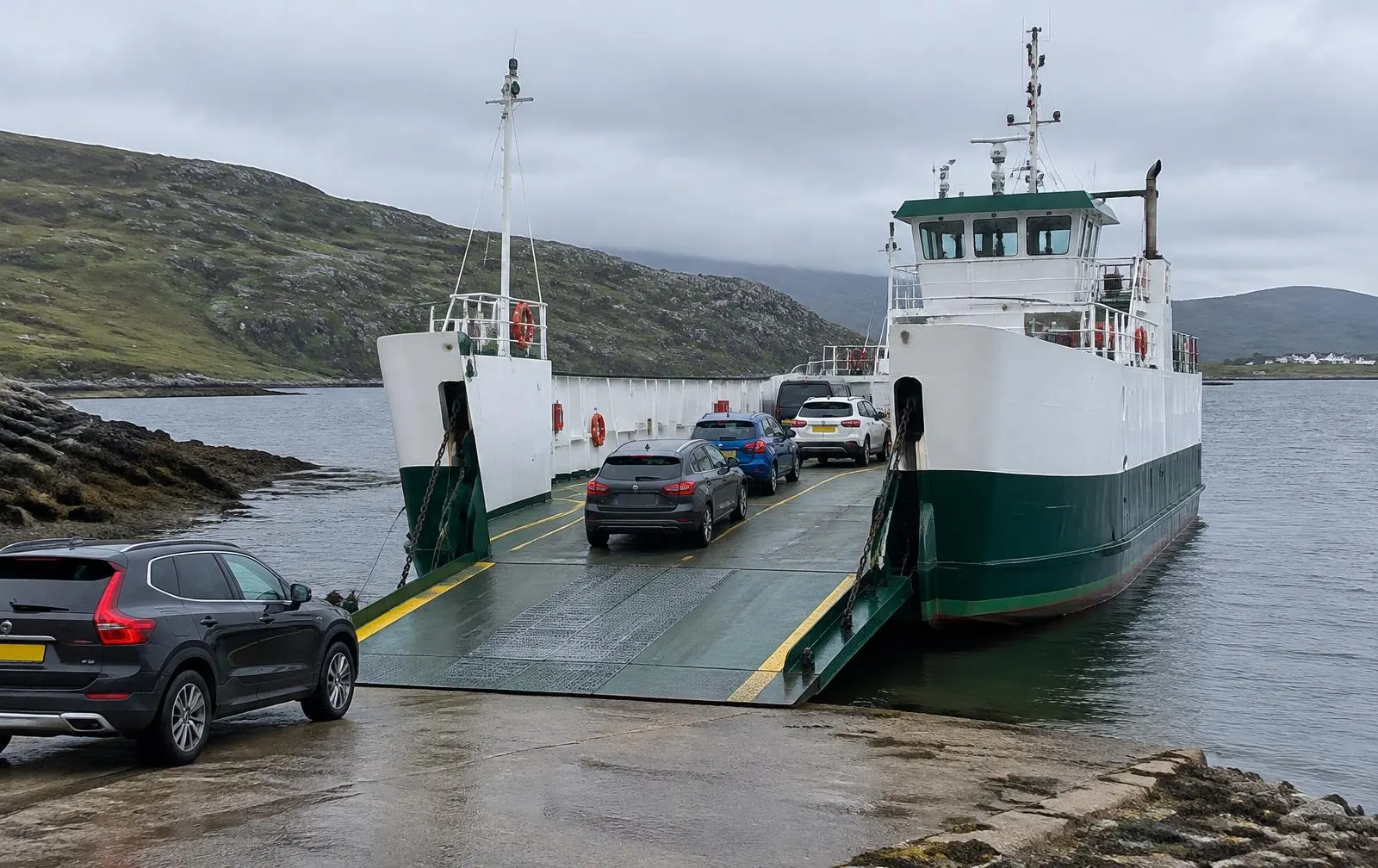
- Loading ramps: bow, stern or side ramps lowered onto a slipway or linkspan.
- Passenger safety: crews follow safety management procedures, with lifesaving equipment and safety announcements.
- Terminal infrastructure: slipways, linkspans, marshalling lanes and waiting areas.
- Ferry operations: crews manage loading order, weight distribution and turnaround to keep to the timetable.
Ferry Timetables
Timetables grew out of the steamer age, when reliable steam power made scheduled sailings possible. A modern Scottish ferry timetable typically reflects:
- Regular departures — frequent shuttle sailings on short routes, fewer on longer ones.
- Seasonal changes — separate summer and winter timetables.
- Weather disruptions — wind and sea state can delay or cancel sailings.
- Operational changes — maintenance, vessel swaps or crew availability can alter services.
- Journey planning — always check live status and allow time for connections.
Travelling to the Isle of Mull
The main route to Mull is Oban–Craignure. The Lochaline–Fishnish crossing offers a short sea crossing of the Sound of Mull for travellers approaching from Fort William and the north, usually combined with the Corran ferry.
Travelling to the Isle of Bute
The main route to Bute is Wemyss Bay–Rothesay. The Colintraive–Rhubodach crossing links Bute with Cowal and Argyll across the Kyles of Bute in just a few minutes.
Ferry Tickets and Prices
- Vehicle fare categories: usually based on vehicle type and length, with separate rates for motorcycles, bicycles and commercial vehicles.
- Passenger fares: adults, children and concessions may be priced differently.
- Current pricing: many CalMac routes use Road Equivalent Tariff; check current fares with the operator.
- Ticket conditions: validity, refunds and changes are set by the operator.
- Official information: always obtain fares from the official CalMac website.
Ferry Booking Information
Booking arrangements differ by route. Some longer routes take advance reservations; short crossings may operate differently. We make no claim about whether advance reservations are available on Lochaline–Fishnish or Colintraive–Rhubodach — check with the official operator. This site has no booking or payment system.
The Future of Scottish Ferries
- Vessel modernisation: replacing ageing ships is a major public priority.
- Environmental technology: hybrid and battery-electric ferries are increasingly used on shorter routes.
- Passenger accessibility: better access for disabled passengers on new vessels and terminals.
- Island connectivity: reliable services underpin population retention and island economies.
- Sustainable transportation: integrating ferries with buses, trains and active travel.
Official Travel Information
Use the genuine operator for current information:
These are external links to the operator's website. calmac.world is independent and not affiliated with CalMac.