
Independent website. Independent Scottish ferry history and travel information website. Not affiliated with, operated by or endorsed by CalMac or Caledonian MacBrayne. We do not sell tickets, take bookings or publish live departure times.
Route Overview
The Lochaline–Fishnish ferry is a short vehicle crossing of the Sound of Mull, the long, sheltered channel that separates the Isle of Mull from the mainland peninsula of Morvern. It is one of the ways to bring a car to Mull, alongside the main Oban–Craignure route and the Kilchoan–Tobermory crossing.
Lochaline is a village on the southern coast of Morvern, at the mouth of Loch Aline. Morvern is one of the most sparsely populated parts of the Scottish mainland, reached by single-track roads from Strontian and Loch Sunart, or via the Corran ferry across Loch Linnhe. The village is known for its silica sand mine, opened during the Second World War, and its sheltered anchorage.
Fishnish lies on the east coast of the Isle of Mull, between Craignure and Salen, and connects directly to the island's main road. From here drivers can head south towards Craignure, Fionnphort and Iona, or north towards Salen and Tobermory.
The crossing carries foot passengers, cyclists, cars and commercial vehicles, making it an important part of the road network for Morvern and Mull residents and for visitors. For background, see our history of the Lochaline–Fishnish crossing.
Lochaline to Fishnish
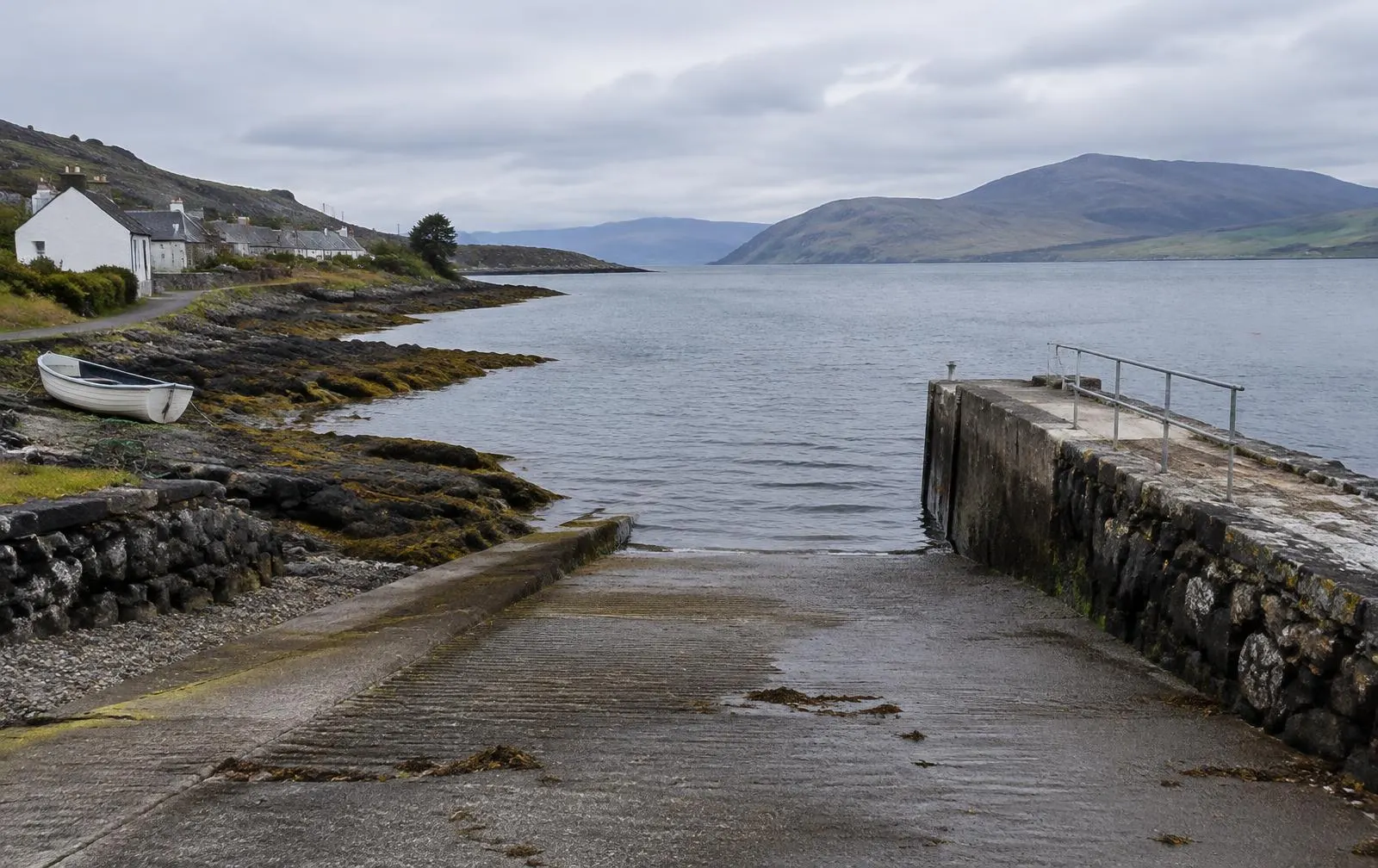
The ferry from Lochaline to Fishnish leaves from the slipway at the edge of Lochaline village. As the ferry pulls away, look back at the narrow entrance of Loch Aline and the slopes of Morvern; ahead, the hills of Mull rise across the Sound. The crossing is brief, but on a clear day it offers fine views along the Sound of Mull.
For many travellers this is the most convenient Lochaline to Mull ferry option, particularly when arriving from Fort William, Glencoe or Ardnamurchan. Allow plenty of time for the drive through Morvern, which is largely on single-track roads with passing places.
Fishnish to Lochaline
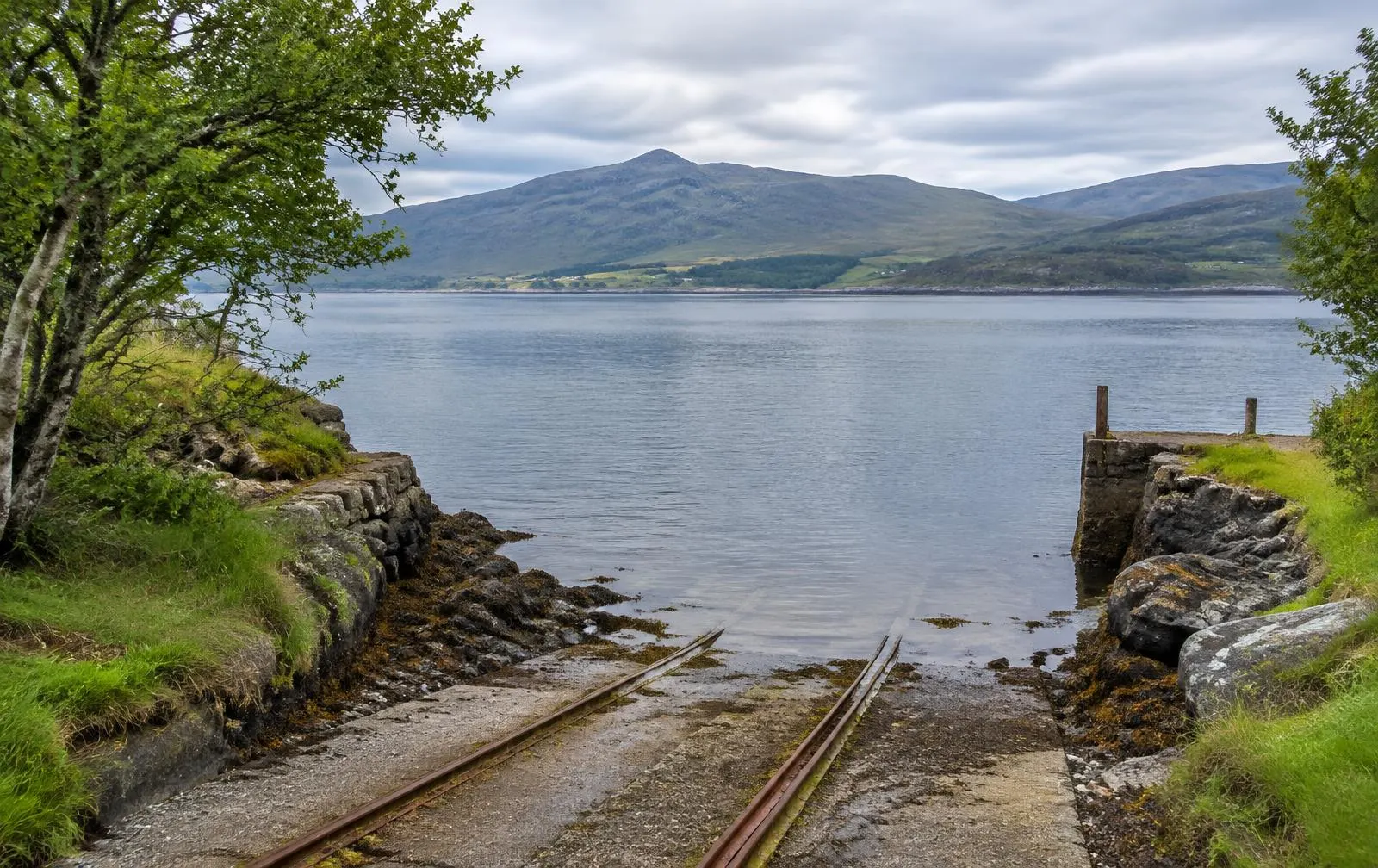
The ferry from Fishnish to Lochaline runs in the opposite direction, from Mull's east coast back to Morvern. It is a natural choice for anyone leaving Mull towards the north — for Fort William, Mallaig, Skye or Ardnamurchan — and avoids the queue at Craignure for the larger Oban ferry. Fishnish has very limited facilities, so arrive with time to spare.
Lochaline Ferry Timetable
We do not publish departure times, because they change and must be accurate. The current Lochaline ferry timetable is published by the operator. To find up-to-date Lochaline ferry times:
- Current departure times: see the route timetable on the official CalMac website.
- Timetable updates: timetables are usually issued for summer and winter seasons; check the version covering your date.
- Seasonal changes: frequency and first and last sailings may differ between seasons, weekdays and Sundays.
- Service disruptions: check the operator's live service status on the day, especially in winter or strong winds.
- Check-in guidance: follow the operator's advice on arrival times; on short crossings vehicles generally queue in marked lanes at the slipway.
Fishnish Ferry Timetable
The Fishnish ferry timetable is part of the same route timetable as Lochaline. Because the ferry shuttles back and forth, a delay or cancellation affects both directions. If you are catching an onward connection — such as the Corran ferry or a sailing from Oban — check both timetables and leave a margin. Fishnish ferry times can change at short notice for weather or technical reasons.
Car Ferry to Mull
As a Lochaline car ferry, the route offers an alternative car ferry to the Isle of Mull. Points to be aware of:
- Vehicle boarding: crew direct vehicles onto the deck via the ramp. Follow instructions, drive slowly and apply your handbrake once parked.
- Passenger facilities: small ferries on short routes offer limited facilities; follow crew guidance on where passengers may stay during the crossing.
- Vehicle categories: cars, motorhomes, vans, commercial vehicles, motorcycles and bicycles are treated differently for fares and space; check length, height and weight limits.
- Terminal arrival: join the marked queue and arrive in good time, particularly in summer.
- Road access: Morvern is reached on single-track roads; Fishnish connects to Mull's A849.
Ferry Prices and Tickets
We do not publish Lochaline ferry prices, because only the operator can give accurate current fares. Factors that commonly affect the Lochaline ferry cost include vehicle type and length, number of passengers, single or return travel, and any concessions or multi-journey tickets for which you are eligible. Information on Lochaline ferry tickets, and whether Lochaline ferry booking is available or required, is on the official website.
Journey Planning
Reaching the ferry to Mull from Lochaline typically involves crossing Loch Linnhe on the Corran ferry south of Fort William, then driving through Ardgour and Morvern. Allow extra time for single-track roads, livestock and wildlife. Fuel stations are few, so fill up in advance. On Mull, plan your onward journey to Tobermory, Craignure or Iona, and keep an alternative in mind in case of disruption: Oban–Craignure is the main connection to the island.
Frequently Asked Questions
Where does the Lochaline ferry go?
The Lochaline ferry crosses the Sound of Mull from Lochaline in Morvern to Fishnish on the Isle of Mull, and back.
How long is the Lochaline to Fishnish crossing?
It is a short crossing, typically in the region of fifteen to twenty minutes. The exact scheduled duration is shown on the operator's current timetable.
Is the Lochaline ferry a car ferry?
Yes. The Lochaline car ferry carries cars, vans, motorcycles and bicycles as well as foot passengers. Restrictions may apply to large or heavy vehicles, so check with the operator first.
Where can I find the Lochaline ferry timetable?
The current Lochaline ferry timetable and Fishnish ferry times are published by CalMac on calmac.co.uk. Timetables change between seasons, so check the version for your travel date.
Can I book the Lochaline ferry in advance?
Booking arrangements on short crossings can differ from longer routes. Check the official CalMac website to see whether Lochaline ferry booking is available or required on your date. This site does not take bookings.
How much does the Lochaline ferry cost?
We do not publish fares. Lochaline ferry prices depend on factors such as vehicle type and length, number of passengers and ticket type. Current fares and tickets are shown on the operator's website.
Is Lochaline–Fishnish quicker than Oban–Craignure?
It depends where you start. From Fort William, Ardnamurchan or the north, driving to Lochaline and taking the short crossing can avoid travelling south to Oban. From Glasgow and the south, Oban is usually more direct.
What happens if the ferry is disrupted by weather?
Sailings may be delayed or cancelled in strong winds or for operational reasons. The operator publishes live service status updates; check them on the day and allow flexibility.
Are there facilities at Fishnish and Lochaline?
Both are small ferry points with slipways and limited facilities. Lochaline village has some local services; Fishnish is a quiet spot on Mull's east coast. Plan for fuel, food and toilets accordingly.